
Reviewed · HISTORICAL TOURS
London: Rock ‘n’ Roll History Tour
London’s rock story is scattered across ordinary streets, shopfronts, pubs, hotels, and side roads. This 3.5-hour bus tour connects those dots, from the Rolling Stones and Cream to Queen, the Beatles, punk, reggae, and Jimi Hendrix. The final Abbey Road crossing gives you the classic photo, but the stories along King’s Road and in Kensington are the real heart of the trip.
I like the way the tour combines music with London neighborhoods, especially Chelsea, Notting Hill, and Kensington. I also like the practical bus format: guides such as Clive, Ian, Colin, and Steve can cover far more ground than you could on foot. The tradeoff is that many locations are viewed from the coach, and the pace can feel quick if you want time at every address.
Key points at a glance
- King’s Road connects fashion and rock history: See former haunts linked with the Rolling Stones, Mick Jagger, Marianne Faithfull, Cream, the Beatles, and the Chelsea Drug Store.
- Punk gets proper attention: The route passes places tied to the Sex Pistols, The Clash, Poly Styrene, and X-Ray Spex.
- Kensington brings the Queen story: Visit the area where Queen formed, Freddie Mercury lived, and album parties took place.
- Notting Hill adds reggae and counter-culture: The tour links London’s Caribbean community with its reggae, hippie, and punk past.
- Abbey Road is the main photo stop: You can walk the famous crossing, with guides helping take pictures.
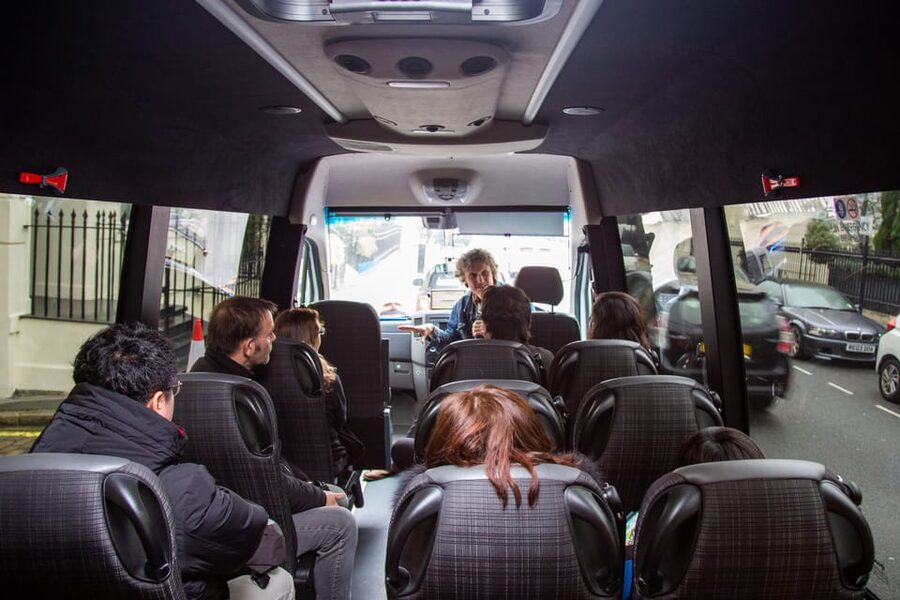
- The bus saves your legs: The air-conditioned coach handles long distances, though this is not a wheelchair-accessible tour.
Why this tour works for music fans
This is not a museum visit with glass cases and headphones. It is a moving tour of London’s streets, where the setting often matters as much as the name attached to it.
You pass the places where musicians lived, played, recorded, partied, shopped, and sometimes caused trouble. A good guide fills in the gap between the address and the legend. Clive, Ian, Colin, Richard, and Steve are among the guides praised for bringing plenty of facts, humor, and personal energy to the ride.
That human touch matters here. A list of former homes would get dull fast. The best part is hearing why a particular pub, club, studio, or hotel mattered at a certain moment in music history. Guides have used photo albums to show how streets looked in the past, which helps you see more than a modern building or a busy road.
The tour focuses heavily on the 1960s and 1970s. You get the London of the Beatles, Rolling Stones, Queen, Cream, Led Zeppelin, Jimi Hendrix, Bob Marley, and the punk bands. The route also reaches beyond classic rock, with links to London’s Caribbean community and reggae scene.
You should come with more than a passing interest in music. If you can name a few bands from the British rock era, you will get much more from the stories. If your music taste runs elsewhere, the neighborhood commentary still gives the trip value, but the tour’s main appeal remains its pop culture thread.
More history walks in London:
- London Small Group Tour of Historical Pubs
★ 5.0 · 10,422 reviews - Soho Music & Historic Pubs Tour
★ 5.0 · 1,993 reviews - London: Historic Pubs of Central London Walking Tour
★ 4.9 · 1,065 reviews
King’s Road, where fashion met rock
The first major chapter unfolds around King’s Road in Chelsea. This street is useful because it brings several sides of London’s music story together: fashion, youth culture, record shops, clubs, celebrity homes, and changing social attitudes.
You hear about the Rolling Stones sharing a flat, Mick Jagger and Marianne Faithfull, and the Chelsea Drug Store, a famous meeting place from the area’s swinging years. The tour also points out Beatles connections, Eric Clapton’s Cream period, and locations linked with celebrity weddings.
Do not expect to enter every former club or private building. The value is in seeing how these names fit into the neighborhood. A street that now feels polished and fashionable once carried a strong sense of rebellion and display.
King’s Road also helps explain why London’s music culture was never only about songs. Clothes, hair, clubs, and social circles were part of the package. The boutiques mattered because musicians and fans were creating a look as well as a sound.
This section can move quickly. The coach may pause briefly, or the guide may point out a spot as you pass. Keep your phone ready, but listen first. The story is usually more useful than an isolated photograph of a doorway.
Punk’s early London addresses
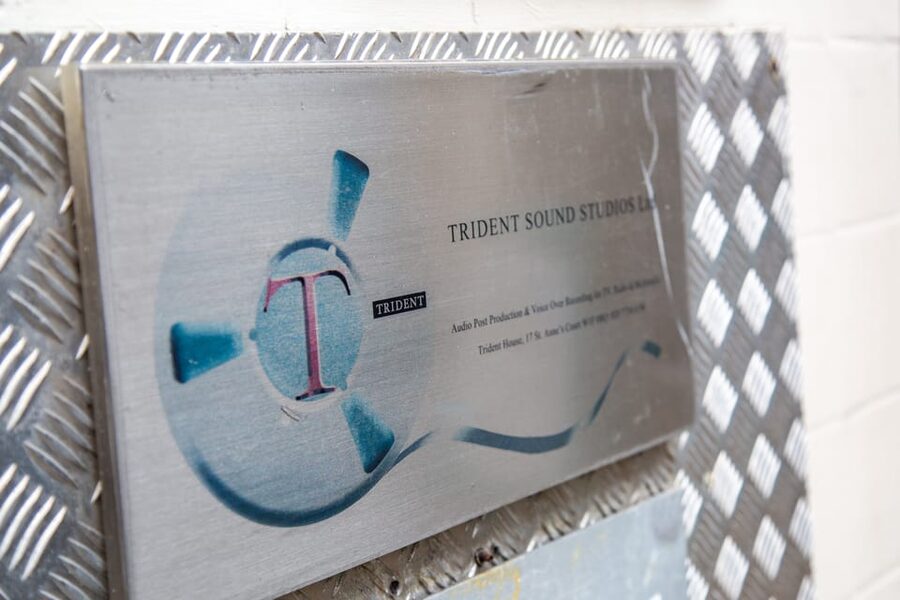
The tour then follows London’s punk story, with links to the Sex Pistols, The Clash, Poly Styrene, and X-Ray Spex. This gives the experience a sharper edge than a simple Beatles-and-Abbey-Road outing.
The punk movement grew from small venues, rough rehearsal spaces, independent shops, and places where young musicians could find an audience. The route passes gig sites, recording studios, and shops associated with the scene and its followers.
This part works best if you think of punk as a reaction to the polished music industry around it. The locations help show how a new sound could grow from tight local circles and modest rooms, not only from major concert halls.
Again, most of this is a street-level orientation rather than an inside visit. You will not spend long at each address. But the bus lets you link several sites in one afternoon, which would take considerable planning on your own.
Kensington and the world of Queen
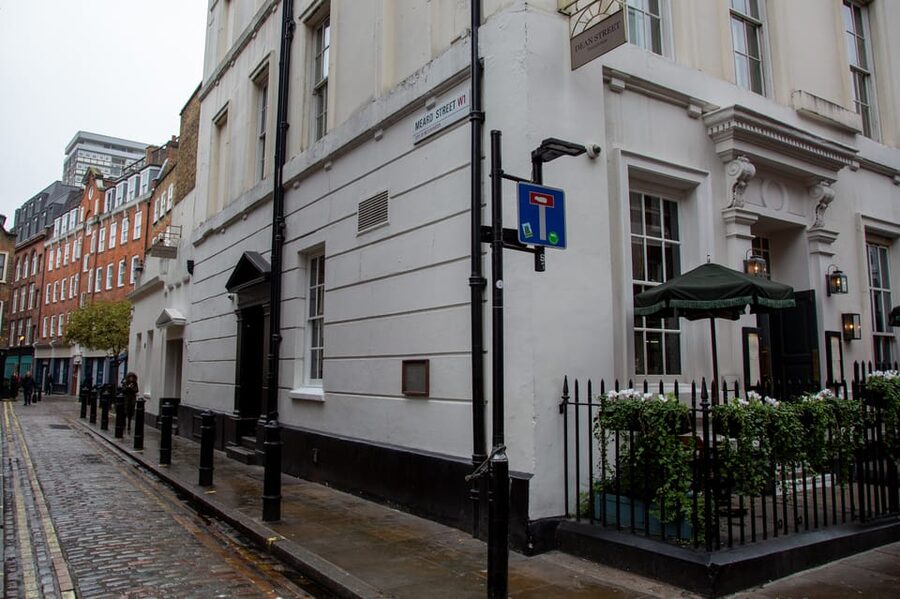
Kensington brings a different mood. This is the neighborhood associated with the formation of Queen, Freddie Mercury’s London life, and parties tied to the band’s albums.
The Queen section is one of the strongest reasons to book if you are a fan of Freddie Mercury. You see the area in which the band developed, rather than hearing about Queen as a story detached from London. The guide points out relevant addresses and explains how the district fitted into the band’s early years.
The tour does not turn these places into theatrical attractions. You are seeing real streets and former homes, often from the coach. That makes the experience less dramatic than a dedicated exhibition, but it also keeps the focus on the city where the events happened.
Kensington is also a useful break from the single-band approach. The guide continues to point out wider London sights and cultural details, so you get a sense of the neighborhood beyond Queen.
A few more half-days in London worth comparing
- London: The London Eye Entry Ticket
★ 4.6 · 35,875 reviews - From London: Harry Potter Warner Bros Studio Tour
★ 4.7 · 26,588 reviews - London: Westminster to Greenwich River Thames Cruise
★ 4.5 · 22,836 reviews - London: Madame Tussauds London
★ 4.6 · 20,915 reviews
Notting Hill, reggae, and London’s counter-culture
Notting Hill adds an important part of the city’s music story that can be missed on a classic rock tour. The area is presented as the center of London’s Caribbean community and a major part of the city’s reggae scene.
You also hear about Notting Hill as a former home for hippies and punks. That mix shows how different music communities overlapped in London. Rock, reggae, fashion, politics, and street culture did not exist in separate boxes.
I like this section because it widens the tour beyond the most familiar British bands. Bob Marley and reggae connections sit alongside the stories of hippie London and punk London. You get a better sense of how music moved through neighborhoods and communities.
The route also reaches Jimi Hendrix sites, including places where he lived, played, and died. Those stops carry more weight than a standard celebrity address. The guide’s job is to give the setting context without reducing Hendrix’s life to a succession of landmarks.
Beatles sites before the Abbey Road finale
The Beatles appear in several parts of the tour. You pass former homes and gig sites, along with the site of the Get Back rooftop concert.
That rooftop location is a particularly good example of how the tour works. You may not be entering a landmark attraction, but you are standing near a place tied to a famous public moment. The guide can help you picture the event and understand its place in the Beatles’ final period.
Other Beatles-related stops connect recording, live performance, and everyday life. This makes the band feel less like a distant group of album covers and more like musicians moving through London’s streets.
If the Beatles are your main reason for booking, keep your expectations clear. Abbey Road is the formal photo stop, while many earlier Beatles locations are viewed from the road. You get breadth and context rather than long visits at a few sites.
Abbey Road, the tour’s big finish
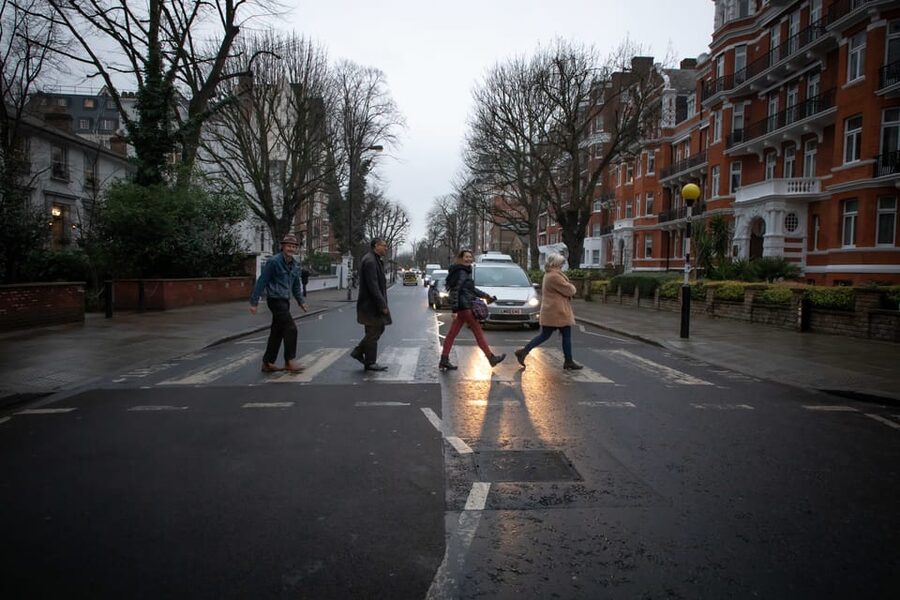
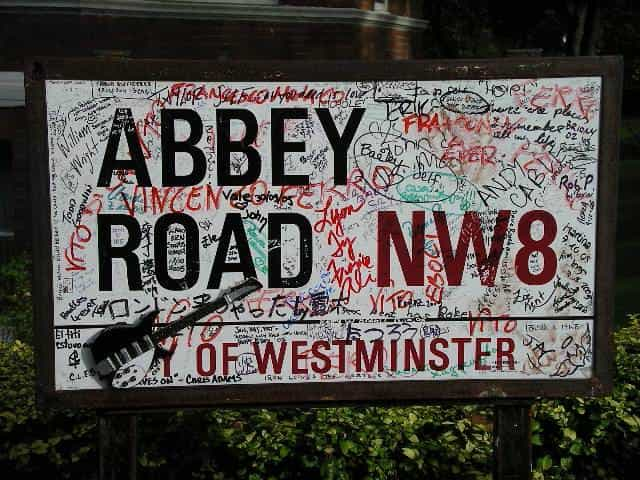
The final stop is Abbey Road, where you can walk across London’s most famous street crossing and take photographs. For many people, this is the moment they have been waiting for.
The crossing is still an ordinary public road, so timing and traffic affect the experience. You will need to pay attention, move with care, and accept that other people may also be taking photos. Guides have helped groups organize pictures, and Richard was specifically praised for patiently photographing everyone who wanted a turn.
This is not entry into Abbey Road Studios. The supplied details describe a visit to Abbey Road and a photo stop at the crossing. That distinction matters if you are expecting an interior studio tour.
The photo stop also gives the afternoon a clear ending. After a fast run through several districts and decades, you get a simple activity you can take home: your own attempt at the famous Beatles pose.
The bus, timing, and pace
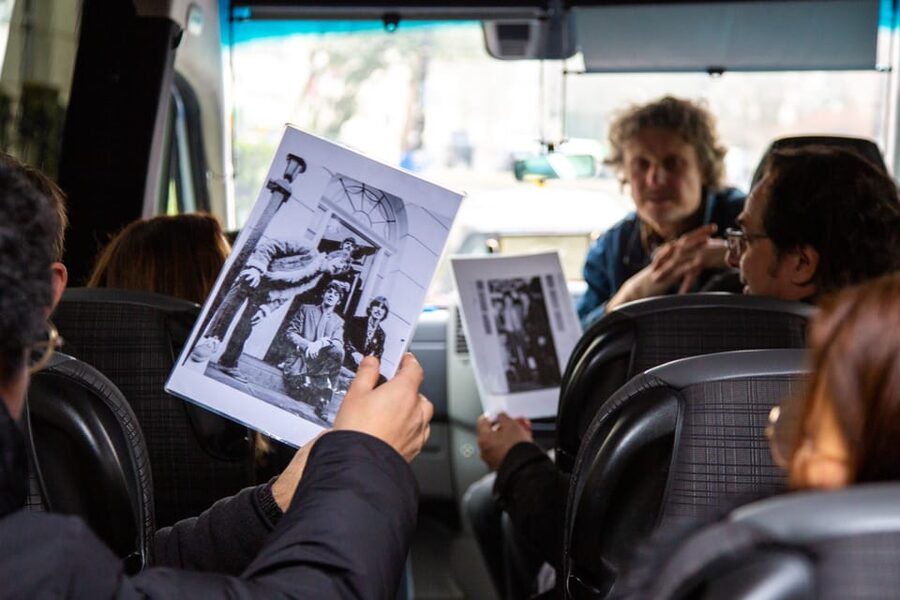
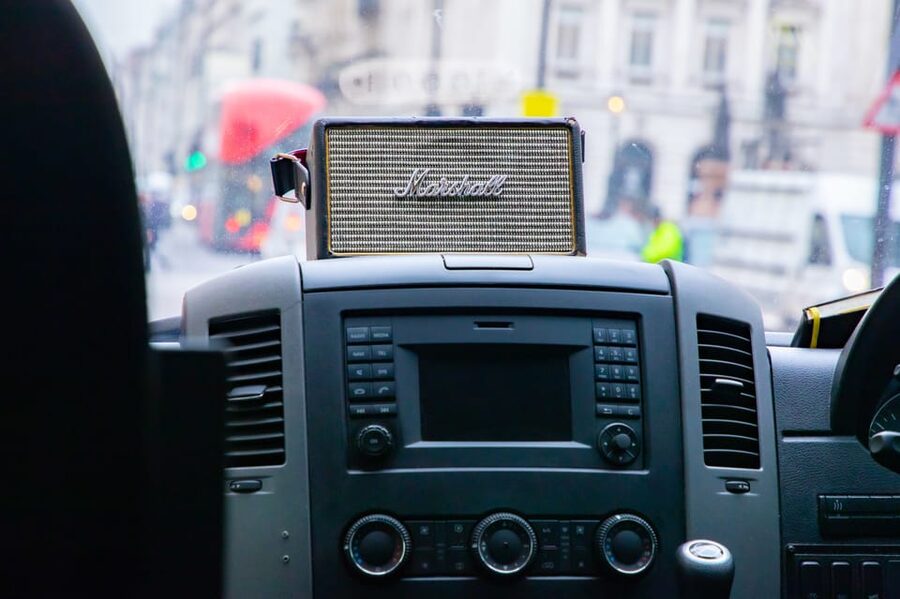
The air-conditioned bus is a sensible choice for this route. Chelsea, Kensington, Notting Hill, and St John’s Wood are too spread out for a relaxed walking tour in three and a half hours. The coach also gives you shelter on cold or rainy days, and one participant specifically found the ride comfortable during poor weather.
The driver matters. London’s narrow streets and heavy traffic can make this sort of route frustrating, but drivers such as George, Dave, Paul, and Sylvius have been praised for handling tight turns and keeping the route moving.
There is a cost to using a large bus. Some streets are narrow, and the vehicle may not stop directly beside every location. One report noted that some sites were difficult to see and that stops could be short. You should think of the tour as a guided overview, not a series of leisurely neighborhood walks.
Wear comfortable shoes even though you spend much of the time seated. You will still get out at Abbey Road, and you may want to explore some of the districts later on your own.
The meeting point is the Duke of York Column in St James’s until March 31, 2026, about five minutes from Piccadilly Circus or Charing Cross stations. From April 1, 2026, departure is from the Millennium Gloucester Hotel in Kensington, near Gloucester Road Underground Station, by the casino entrance. Arrive at least 10 minutes early.
Is $74 a fair price?
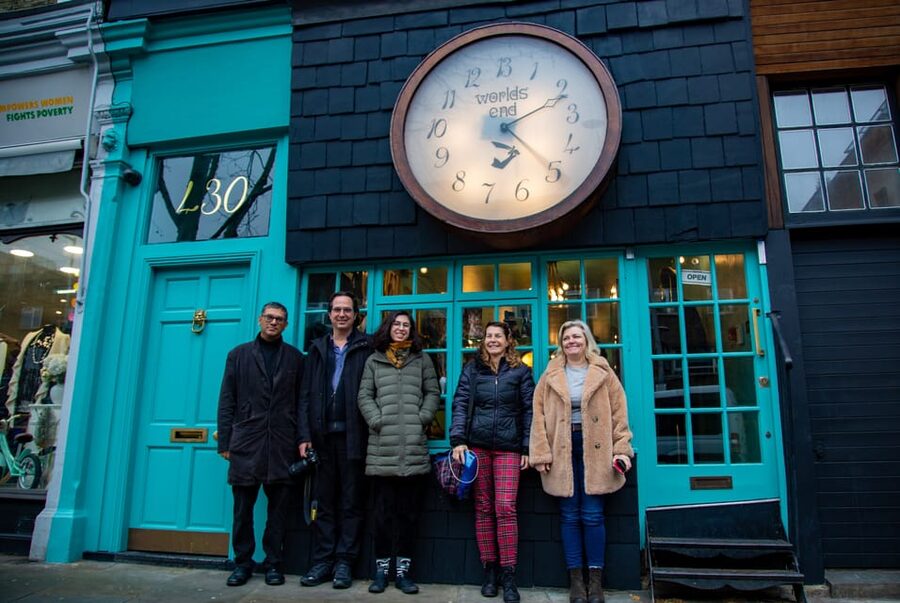
At $74 per person, this is not the cheapest way to see London. But it can be good value if you want one organized afternoon covering several neighborhoods and decades of music.
You are paying for transport, an English-speaking guide, the Abbey Road visit, and the research and storytelling that connect scattered addresses. Re-creating the route independently would mean studying locations, planning transport, and accepting that some sites may be difficult to identify without help.
The value drops if you only want Abbey Road. You could visit the crossing separately for far less. The tour earns its price through the wider route: King’s Road, Kensington, Notting Hill, Jimi Hendrix locations, punk sites, Beatles addresses, and the Get Back rooftop site.
The strongest guides turn the bus ride into the main attraction. Clive, Ian, Colin, Richard, and Steve have all been praised for clear storytelling, humor, and strong music knowledge. Your exact guide will affect the tone, but the company has a deep bench of capable presenters.
Free cancellation up to 24 hours before departure and a reserve-now, pay-later option make the booking less rigid. The tour is in English, and it is not suitable for wheelchair users.
Who should book it?
Book this if you love British rock, want a broad introduction to London’s music history, or prefer seeing many locations without changing trains and buses all afternoon. It also suits solo visitors and anyone who cannot manage a long walking tour, since the coach does most of the work.
It is a good choice for families with older children, music-minded couples, and anyone who wants neighborhood context along with band stories. The tour can also help you plan later walks. Take notes when a location catches your interest, then return on your own with more time.
Skip it if you want museum interiors, long stops, or a quiet architectural tour. Much of the experience happens from the bus, and the pace is brisk. You should also avoid booking it if your main goal is a detailed Beatles-only experience, since the route covers many artists and movements.
FAQ
How long is the London Rock ’n’ Roll History Tour?
The tour lasts 3.5 hours.
How much does the tour cost?
The listed price is $74 per person.
What neighborhoods does the tour visit?
The route covers Chelsea, Kensington, Notting Hill, and St John’s Wood, including Abbey Road.
Is Abbey Road included?
Yes. The tour includes a stop at Abbey Road and time to walk across the famous crossing for photographs.
Can I visit inside Abbey Road Studios?
The supplied tour details include a photo stop at the Abbey Road crossing. They do not state that the tour enters Abbey Road Studios.
Which music artists and bands are covered?
The tour includes the Beatles, Rolling Stones, Queen, Cream, Jimi Hendrix, Sex Pistols, The Clash, Poly Styrene, X-Ray Spex, and reggae figures including Bob Marley.
What language is the tour in?
The live tour guide speaks English.
Where does the tour depart?
Until March 31, 2026, it departs from the Duke of York Column in St James’s. From April 1, 2026, it departs from the Millennium Gloucester Hotel in Kensington, near Gloucester Road Underground Station.
Is the tour wheelchair accessible?
No. The tour is not suitable for wheelchair users. Comfortable shoes are recommended.
Should you book this tour?
If London’s rock story is on your list, I would book it. The Abbey Road photo is the obvious prize, but the greater value is the route between the famous moments: King’s Road fashion and music, Queen’s Kensington, Notting Hill reggae, punk addresses, Hendrix sites, and Beatles landmarks.
Go in expecting a fast, coach-based introduction rather than a series of long visits. With that expectation, the $74 price makes sense, especially if you want a well-told overview and a practical way to reach music sites spread across London.
Just added in London
- Royal London Guided Sightseeing Tour and Thames River Cruise★ 4.0 · 31 reviews
- Roman London Private Walking Tour★ 5.0 · 44 reviews
- Westminster Abbey, Big Ben, Buckingham Guided Tour of London★ 5.0 · 451 reviews
- Roman Ruins to Blitz Bombings: A Walking Tour of London’s Fiery History★ 5.0 · 190 reviews
- River Thames Evening Cruise with Sparkling wine and Canapés★ 4.0 · 569 reviews
- Rock and Roll Walking Tour of Soho London★ 4.5 · 64 reviews
- London Private Chauffeur Half-Day or Full-Day Vehicle Rental★ 5.0 · 37 reviews
- Rich people behaving badly★ 5.0 · 47 reviews
Historical Tours, compared.
A History of Terror – Belfast City Centre Walking Tour
Read our review →
Old Town Walking Tour History and Tales in Edinburgh
Read our review →
Shadows of York: Ghost Walk and Horrible History.
Read our review →
Multi-Sensory Small-Group Historic Vaults Tour in Edinburgh
Read our review →
Browse the lists this tour appears in